
Storm Damage Roof Inspection in Tampa: What Roofers Look For After Severe Weather
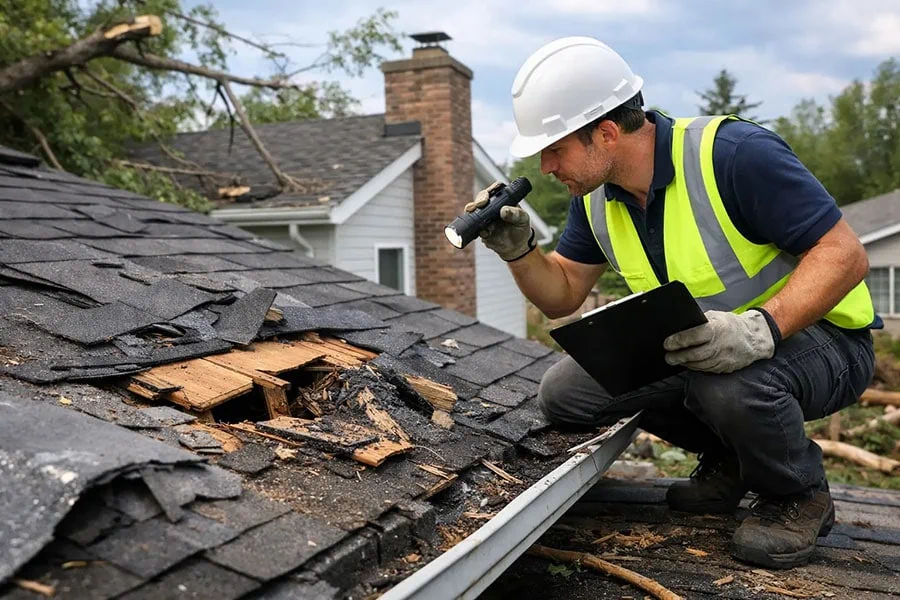
A storm damage roof inspection in Tampa, FL helps homeowners identify roofing problems after high winds, heavy rain, hail, or flying debris. Some storm-related issues are easy to spot from the ground, while other issues stay hidden under roofing materials, around flashing, in attic spaces, or near areas where water can enter slowly.
If your home has missing shingles, cracked roof tiles, ceiling stains, attic moisture, or exposed areas after severe weather, VNPS Roofing can inspect the damage and explain whether you need storm damage roof repair in Tampa, emergency roof tarping, or another roofing service.
VNPS Roofing is a Service-Disabled Veteran-Owned Small Business serving Tampa and surrounding Tampa Bay communities. Our licensed and insured team brings more than 40 years of combined roofing experience to inspections, repairs, and roof replacement recommendations.
Why Tampa Roofs Should Be Checked After Severe Weather
Even minor weather-related wear can become a roof leak in Tampa’s hot, humid climate. Wind, rain, and moisture often make small roofing problems worse when they are not addressed quickly.
Tampa Bay storms regularly bring strong wind gusts, sideways rain, falling branches, and flying debris. Even when a storm does not remove large sections of roofing, it can loosen shingles, shift tiles, separate flashing, or expose weak areas.
A professional inspection helps answer three important questions:
- Is the roof still properly sealed?
- Is water entering the attic or interior?
- Does the affected area require repair, emergency tarping, or further evaluation for replacement?
A storm inspection is not just about finding obvious weather-related issues. It is about identifying weak areas before the next heavy rain turns a minor issue into a larger repair.
Visible Roof Damage Homeowners May Notice After a Storm
Many signs of storm damage can be spotted from the ground or inside the home. While these warning signs do not reveal every problem, they are good reasons to schedule a professional inspection.
Common signs include missing shingles, lifted shingles, cracked roof tiles, broken ridge tiles, loose roofing materials in the yard, tree limbs or debris on the roof, dented gutters or vents, granule loss near downspouts, water stains, bubbling paint, damp drywall, wet insulation, or attic moisture.
Do not climb onto a storm-damaged roof to inspect it yourself. Wet roofing materials, loose tiles, soft decking, and hidden structural issues can make the roof unsafe.
Hidden Storm Damage, Roof Leaks, and Interior Warning Signs
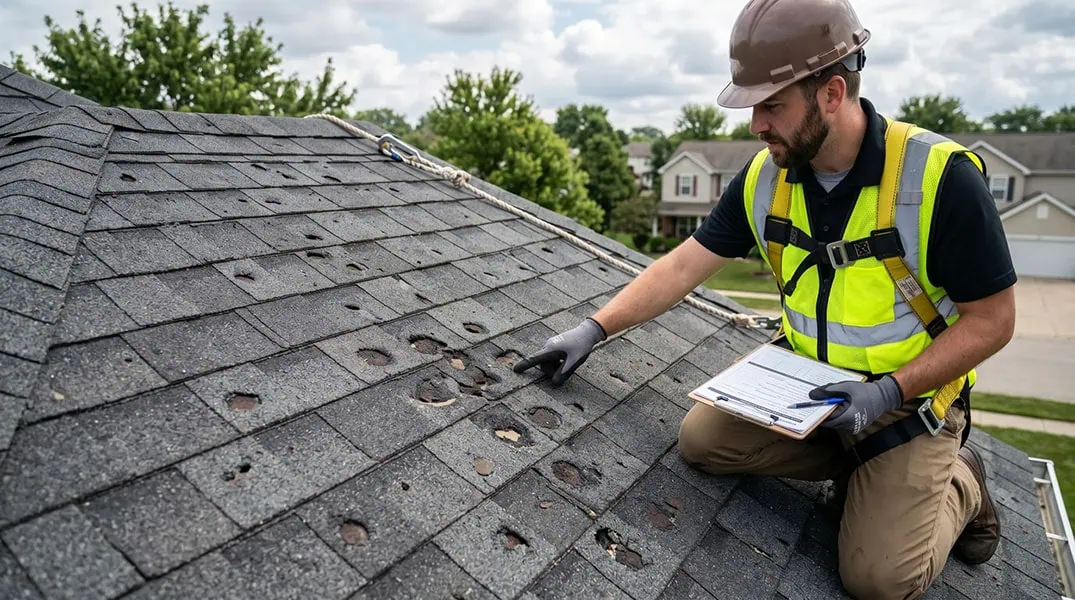
Some storm damage cannot be seen from the ground. A professional inspection may uncover loosened flashing, damaged underlayment, cracked vent boots, soft decking, small punctures, or hidden roof leaks that have not reached the ceiling yet.
Water often travels beneath roofing materials before it becomes visible inside the home. A leak may begin near flashing, a roof valley, a vent, a skylight, or a lifted shingle, then move along decking, rafters, insulation, or framing before showing up as a ceiling stain.
Interior warning signs may include:
- Ceiling stains
- Damp insulation
- Attic moisture
- Bubbling paint
- Wet drywall
- Musty odors
- Dripping water during or after storms
The stain inside your home is not always directly below the roof damage. That is why VNPS Roofing checks both the roof and the interior signs of water intrusion during a storm damage roof inspection in Tampa.
Finding hidden storm damage early can help prevent a small leak from turning into larger interior repairs after the next heavy rain.
Wind, Hail, and Debris Damage Roofers Look For
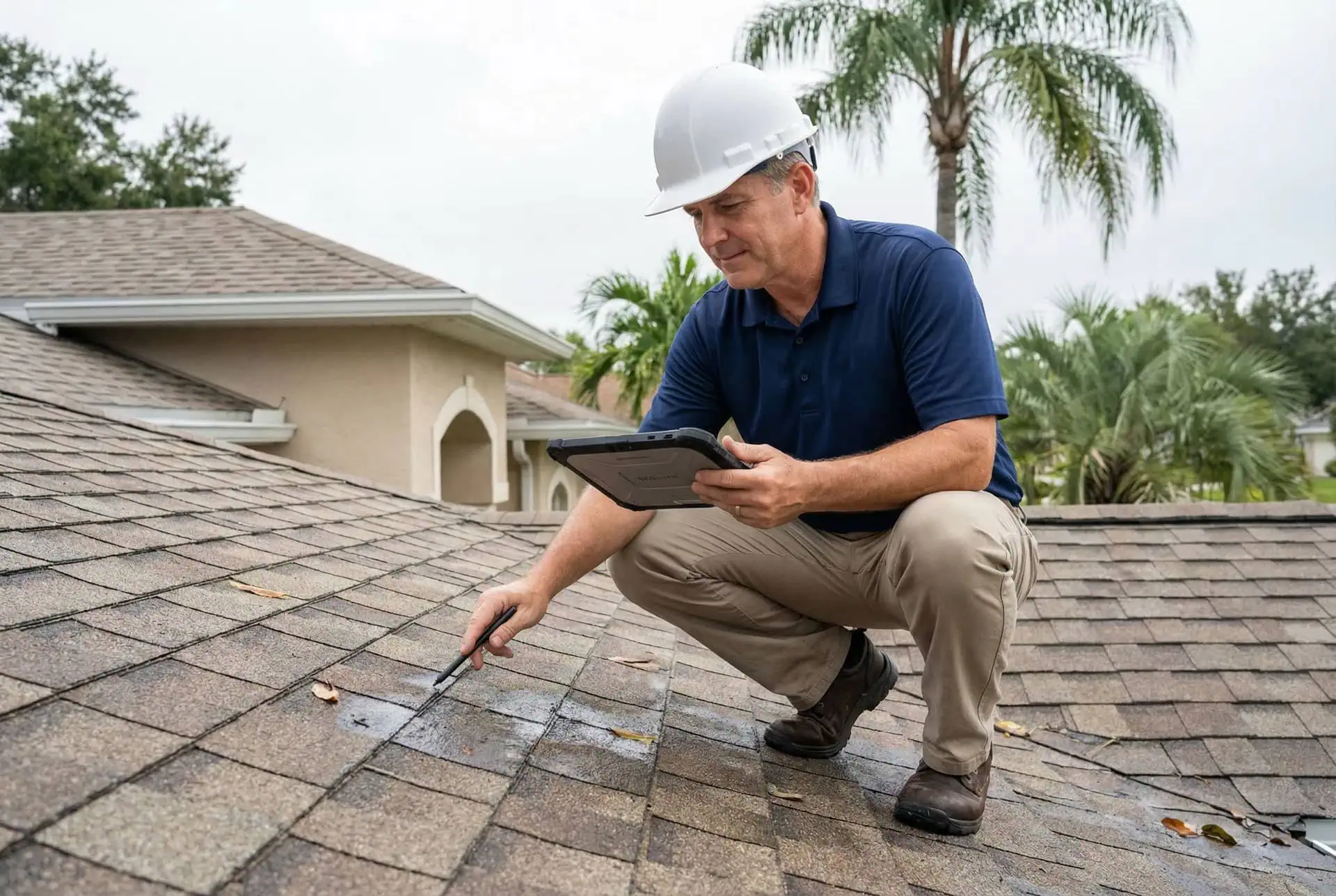
Wind, hail, and flying debris can affect shingles, roof tiles, flashing, vents, gutters, roof edges, valleys, and flat roof membranes. A repair may be possible when the affected area is limited, but a professional inspection is needed to determine the best next step.
Wind-Driven Damage
Wind-driven damage often involves roofing materials that have been lifted, creased, loosened, or blown away. Strong gusts can break the seal on asphalt shingles, shift tile sections, separate flashing, or expose vulnerable roof edges to water.
Roofers commonly look for lifted shingle edges, missing shingles along slopes or edges, shifted roof tiles, bent flashing, damaged vent boots, granule loss, and interior leaks after wind-driven rain.
Hail and Debris Impact
Hail and flying debris can leave circular impact marks, concentrated granule loss, cracked tiles, dented vents or gutters, bruised asphalt shingles, damaged metal flashing, punctures, or debris lodged in valleys.
Not every impact causes an immediate leak. Some impacts weaken the roofing system and increase the risk of future water intrusion.
When Emergency Roof Tarping May Be Needed
Emergency roof tarping may be recommended when a storm leaves part of the roof exposed or allows water to enter the home. A tarp provides temporary protection while permanent repairs are planned and scheduled.
VNPS Roofing may recommend emergency roof tarping in Tampa when:
- The roof deck is exposed
- Shingles or tiles are missing
- A fallen branch or debris has exposed the underlying structure
- Water is entering the attic or living space
- A flat roof membrane has been torn or punctured
- Permanent repairs cannot be completed safely right away
A tarp is not a permanent repair. Its purpose is to reduce additional water damage until a licensed roofer can restore the system properly.
When Storm Damage Means Repair vs Replacement
Storm damage on Tampa Bay roofs does not always mean roof replacement. In many cases, repair is the practical solution when the affected area is limited and the rest of the roofing system remains in good condition.
Repair may make sense when:
- The roof is generally in good condition
- Damage is limited to one section
- The roof decking remains solid
- The source of the leak is clearly identified
- Roofing materials can be matched for a proper repair
Replacement may need to be discussed when:
- Damage is widespread across multiple areas
- The system is nearing the end of its service life
- Decking is soft or deteriorated in several locations
- Large sections of roofing materials have been compromised
- Repairs would no longer provide reliable long-term protection
After completing the inspection, VNPS Roofing explains whether roof repair in Tampa or roof replacement in Tampa makes more sense based on the condition of your system. Our goal is to recommend the solution that fits the problem, not a larger project when a quality repair is enough.
Schedule a Storm Damage Roof Inspection in Tampa
If your roof may have storm damage, VNPS Roofing can inspect the affected area and explain whether you need repair, emergency tarping, replacement review, or continued monitoring.
VNPS Roofing is a Service-Disabled Veteran-Owned Small Business, licensed and insured, A+ BBB Rated, Owens Corning Preferred, Duro-Last Certified, and backed by over 40 years of combined roofing experience.
We serve Tampa, Lake Magdalene, Hillsborough County, and nearby Tampa Bay communities from 14034 N Florida Ave, Tampa, FL 33613.
Call (813) 609-5596 or request a quote online.
FAQs About Storm Damage Roof Inspections in Tampa
How do you check for roof damage after a storm?
A roofer checks shingles, roof tiles, flashing, vents, valleys, drainage areas, roof penetrations, attic spaces, and interior signs of water intrusion. Homeowners can safely look from the ground for missing shingles, cracked tiles, fallen branches, dented gutters, ceiling stains, or attic moisture.
What does storm damage on a roof look like?
Storm damage may look like missing shingles, lifted shingle edges, cracked roof tiles, damaged flashing, dented vents, dented gutters, granule loss, debris impact marks, or exposed roof areas. Inside the home, it may show up as ceiling stains, damp insulation, bubbling paint, or hidden leaks.
Should I get my roof inspected after a storm in Tampa?
Yes. A professional roof inspection is a smart next step after severe weather if you notice missing roofing materials, water stains, attic moisture, damaged flashing, debris impact, or new leaks. High winds and hail can create hidden issues that may not appear until the next heavy rain.
When is emergency roof tarping needed after a storm?
Emergency roof tarping may be needed when water is entering the home, roofing materials are missing, the roof deck is exposed, or permanent repairs cannot be completed safely right away. Tarping is temporary protection until permanent roof repair can be completed.
Does storm damage always mean roof replacement?
No. Many storm-related roof issues can be repaired when the impact is limited. Replacement may need to be discussed when damage is widespread, the roof is near the end of its service life, or the system can no longer protect the home reliably.
What is the 25% roof rule in Florida?
The Florida 25% roof rule may apply when more than 25% of a roof area or roof section is repaired, replaced, or recovered within a 12-month period. Because exceptions and local code review can affect the answer, homeowners should ask a licensed roofing contractor or local building authority before making repair or replacement decisions.