
Flat Roof Leaks in Tampa: Why They Keep Coming Back
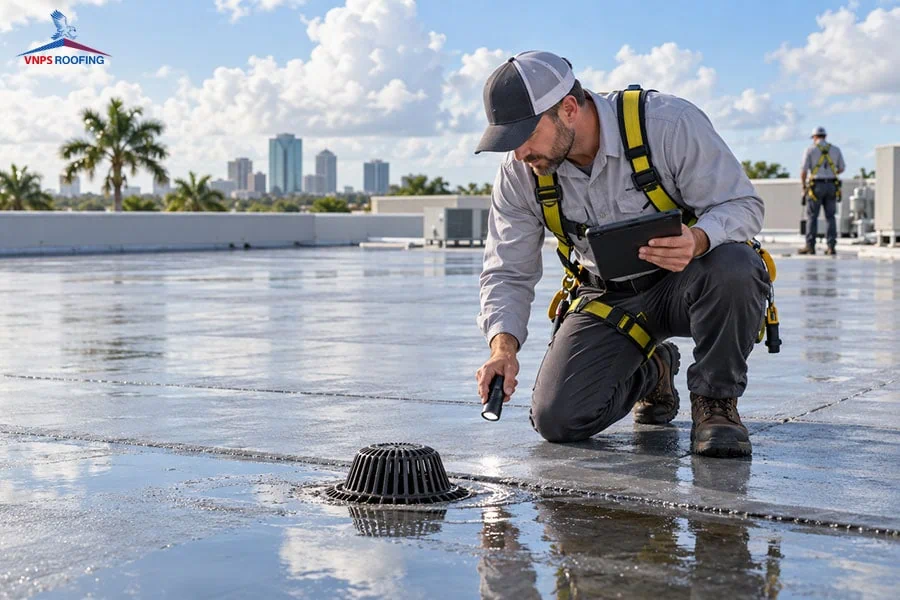
Flat roof leaks in Tampa often come back when the real source of water intrusion is not fully fixed. Tampa’s heavy rain, heat, humidity, and storm debris can turn small low-slope roof problems into repeat issues after the next storm.
If your low-slope roof leaks after heavy rain, VNPS Roofing provides flat roof repair in Tampa for TPO, PVC, EPDM, modified bitumen, and other roofing systems. Our licensed and insured team inspects the roof, looks for the source of the problem, and explains whether you may need repair, emergency tarping, roof coating, or replacement.
Quick Answers: Why Does My Flat Roof Keep Leaking?
Flat roof leaks in Tampa often come back when the real source of water intrusion is not fully fixed.
Here’s what property owners should know:
- Drainage problems are a common cause: Ponding water, clogged drains, blocked scuppers, and debris-filled gutters can keep sending water back to the same weak area.
- Seams and flashing need close attention: Open seams, cracked flashing, roof edges, walls, vents, pipes, skylights, and HVAC curbs are common leak points.
- Past patches may not solve the source: A patch can fail if water is still collecting nearby or if the surrounding roof surface cannot hold the repair.
- Flat roofing materials need the right repair method: TPO, PVC, EPDM, modified bitumen, and coated flat roofs can each show different leak clues.
- The interior stain may not show the true source: Water can travel under the roof surface, along the deck, or through insulation before it appears inside.
- Repeat leaks should be checked before the next storm: Tampa rain, heat, humidity, UV exposure, and storm debris can make a small weak area worse.
What Tampa Property Owners Should Do First
Tampa property owners should respond to a flat roof leak based on what they can safely see inside the building and from accessible ground-level areas.
- If water is actively dripping: Move items away from the leak, contain the water if it is safe to do so, and call a roofer. Emergency tarping may be needed if the roof has an exposed or damaged area.
- If water appears after heavy rain: Note where the stain or drip appears and whether it shows up in the same location each time. Repeat leak patterns can point to drainage, seams, flashing, or roof penetrations.
- If standing water remains after storms: Have the drainage system checked. Ponding water, clogged drains, blocked scuppers, and debris-filled gutters can keep sending water back to the same weak area.
- If the roof was recently patched: A recurring leak may mean the repair covered the visible problem without correcting the drainage issue, open seam, flashing gap, or membrane damage.
- If storm debris is visible: Do not climb onto the roof. A flat roof surface can still be unsafe if the membrane is wet, punctured, soft, or holding water.
Why Tampa Weather Makes Flat Roof Leaks Worse
Tampa weather can put extra stress on a flat roofing system. Low-slope roofs must handle heavy rain, strong sun, high humidity, and storm debris.
Heavy rain puts drainage systems to the test. Strong sunlight can dry out older sealants. Storm debris can puncture the roof surface. Humidity can also make hidden moisture problems harder to find early.
The pitch of a flat roof is also important. A low-slope roof is not completely level. It needs enough slope to move water toward drains, scuppers, and other drainage points.
That is why repeat problems should be checked before the next round of heavy rain. The cause may be small, but Tampa weather can make a weak area much worse.
What the Leak Pattern Can Tell You
The way water gets into a building can give a roofer useful clues before an inspection.
| What You Notice | What It May Point To |
|---|---|
| Water appears only after heavy rain | Drainage overload, ponding water, or wind-driven rain |
| Water returns in the same ceiling area | Water may be traveling from a nearby seam, penetration, or low spot |
| Stains appear near an exterior wall | Flashing, parapet wall, or edge metal issue |
| Water appears after HVAC service or roof traffic | Possible puncture, seam damage, or disturbed flashing |
| Musty odor or soft ceiling area | Possible trapped moisture above the ceiling or roof deck |
| Standing water remains after storms | Poor drainage, sagging areas, or blocked drains or scuppers |
These signs do not replace a roof inspection. However, they can help property owners describe the problem when looking for roof repair services in Tampa.
What VNPS Roofing Looks for on Repeat Flat Roof Leaks
Repeat flat roof leaks often come from drainage problems, open seams, flashing gaps, roof penetrations, or past repair areas that were not fully corrected.
When VNPS Roofing checks a repeat flat roof leak, the team looks at where water collects, how it moves toward drains or scuppers, whether seams or flashing are open, and whether prior patches are still bonded to the roof surface. This helps determine whether the problem is limited to one repair area or tied to a larger drainage or membrane issue.
Ponding Water and Poor Drainage
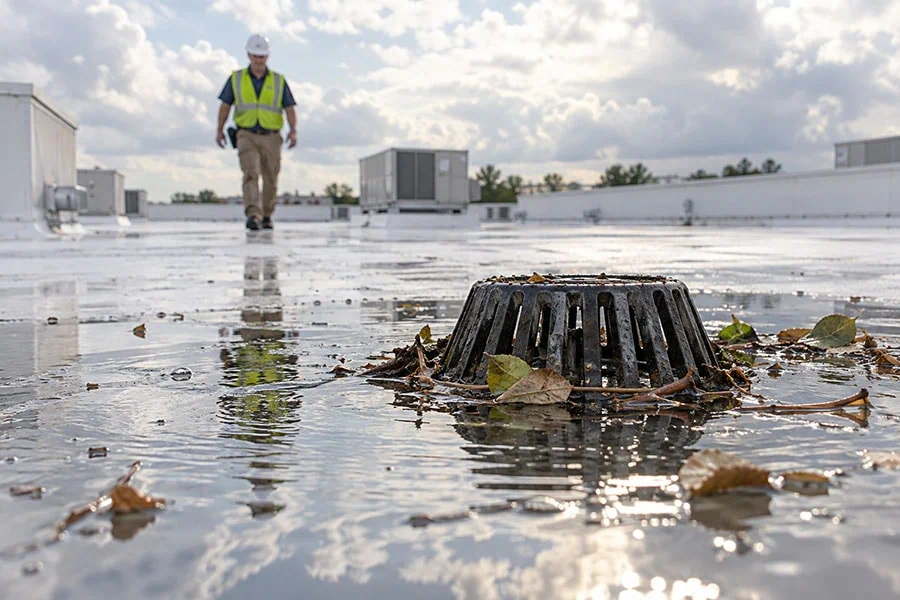
Standing water on a flat roof is one of the main reasons problems can return. When water stays on the roof after rain, it can wear down roofing materials, put stress on seams, collect debris, and increase the chance of water getting into the building.
Drainage problems may come from:
- Clogged drains or scuppers
- Debris-filled gutters
- Poor slope
- Sagging roof areas
- Low spots near HVAC units
- Earlier repairs that changed water flow
A patch may close an opening, but it will not fix a drainage problem that keeps sending water back to the same area.
If a roof has a low spot, blocked scupper, clogged drain, or sagging section, that area may continue to take on more water during Tampa storms.
Failed Seams, Flashing, and Roof Penetrations
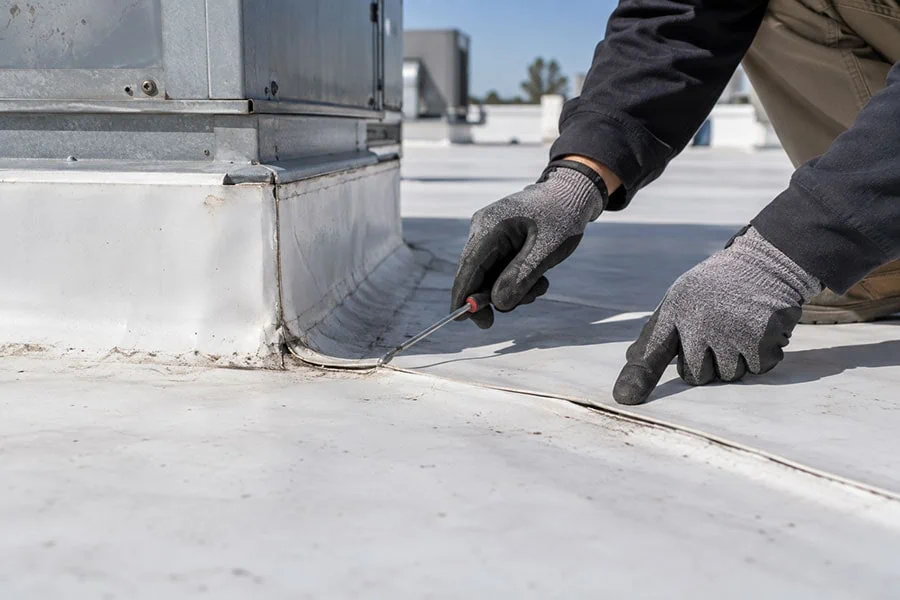
Problems often start where roofing materials meet, bend, or pass through the roof. Seams, flashing, edges, walls, vents, pipes, skylights, and HVAC curbs are common trouble spots because they depend on proper sealing.
A roofer may check for:
- Open seams
- Loose flashing around skylights and HVAC curbs
- Cracked sealant
- Gaps around pipes or vents
- Parapet wall transitions
- Separated edge metal
These details matter because water can follow small openings. Even a small gap around a roof penetration can allow moisture to move below the surface and appear inside several feet away.
Membrane Damage on TPO, PVC, EPDM, and Modified Bitumen Roofs
Different flat roofing materials can have different problems, so the repair method should match the roof system. A repair that works for one material may not be right for another.
| Flat Roof Material | Common Leak Clues | Why It Matters |
|---|---|---|
| TPO or PVC | Open seams, lifted welded details, punctures, or flashing gaps | Seams and welded details often need material-specific repair methods. |
| EPDM | Shrinkage, pulled edges, cracks around penetrations, or loose flashing | Rubber roofing can move over time, especially around edges and roof openings. |
| Modified bitumen | Cracks, blisters, worn areas, or soft spots | Age and heat exposure can weaken the surface and allow moisture below the roof covering. |
| Coated flat roofs | Worn coating, exposed seams, ponding areas, or peeling sections | The coating may need repair only if the roof surface below is still a good candidate. |
TPO roofs are common on commercial buildings, but they still need regular inspections and maintenance. Open seams, punctures, and damaged flashing should be addressed before they lead to larger problems.
Before recommending a patch, seam repair, roof coating, or replacement, a roofer needs to identify the roof material, check its condition, and determine whether moisture is trapped below the surface.
Why Patches Do Not Always Stop Flat Roof Leaks
Flat roof repairs can fail when the work only covers a visible stain or wet area without fixing the condition that caused it.
A patch can be the right fix when the surrounding roof surface is clean, dry, stable, and able to hold the repair. But if water is still collecting nearby or a seam or flashing detail remains open, the problem may return.
Before recommending the next step, VNPS Roofing checks whether the previous repair bonded correctly, whether the surrounding area is still holding water, whether nearby seams or flashing details are open, and whether soft decking or trapped moisture may be present.
This helps determine whether the roof needs a localized repair, drainage correction, roof coating, or replacement.
Repair, Coating, or Replacement: How Roofers Decide
A flat roof problem does not always mean replacement. Roofers usually look at three things first:
- How widespread the problem is
- Whether the roof surface can still hold a repair
- Whether the roof deck is still solid
Repair may make sense when the problem is limited and the surrounding roof is still in good condition.
Roof coating may be worth discussing when the existing surface is a good candidate and can be prepared properly.
Replacement may need to be considered when problems keep returning in several areas, the roof deck is soft, or repairs would no longer provide reliable protection.
If you are comparing next steps, VNPS Roofing can explain whether roof repair in Tampa or roof replacement in Tampa makes more sense for your flat roofing system.
When a Flat Roof Leak Needs Emergency Tarping
Emergency roof tarping may be needed when water is actively entering the home or building, the membrane is torn, storm debris has opened the roof, the deck is exposed, or permanent repairs cannot be completed safely right away.
Tarping is temporary protection. It does not replace permanent roofing services or repairs.
If the leak is active, VNPS Roofing can explain whether emergency roof tarping in Tampa is the right next step before permanent repair work begins.
FAQs About Flat Roof Leaks in Tampa
Why does my flat roof leak only during heavy rain?
A flat roof may have problems only during heavy rain because drainage is overwhelmed, standing water builds up, or wind-driven rain enters around flashing, roof edges, drains, scuppers, or roof penetrations.
Can a leaking flat roof be repaired?
Yes. Many flat roof problems can be repaired when the damage is limited and the surrounding roof surface is still in good condition. A roofing contractor should inspect the roof material, drainage, flashing, seams, and deck before recommending repair.
When should I call a roofer for a flat roof leak?
Call a roofer if you see ceiling stains, dripping water, standing water, damaged surface areas, open seams, musty odors, wet insulation, or recurring problems after rain. Early roof repair services can help prevent a small issue from becoming a larger one.
How can roof maintenance help?
Regular roof maintenance can help catch small problems before they become larger and more expensive. For a commercial flat roof, maintenance may include checking:
- Drains and scuppers
- Seams and flashing
- Roof penetrations
- HVAC curbs
- Surface damage
- Areas where water collects
- Coatings and sealants
Request Flat Roof Repair in Tampa
If your flat roof keeps leaking, VNPS Roofing can inspect the low-slope roofing system and explain the right next step.
VNPS Roofing is a Service-Disabled Veteran-Owned Small Business, licensed and insured, A+ BBB Rated, an Owens Corning Preferred Contractor, and a Duro-Last Certified Installer with 10+ years serving Hillsborough, Pasco, and Pinellas Counties.
Call VNPS Roofing at (813) 609-5596 or request a quote online for flat roof repair in Tampa.